


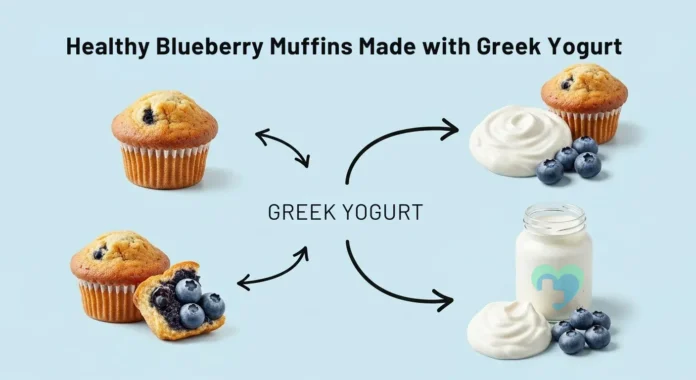
In a world where quick breakfasts often mean grabbing a sugary pastry on the go, there’s something deeply satisfying about starting your day with a homemade treat that’s as nutrition as it is delicious. Enter these healthy blueberry muffins made with Greek yogurt: fluffy, bursting with juicy berries, and packed with protein to keep you full until lunch. This recipe swaps out the usual butter and refined sugars for wholesome ingredients that don’t compromise on flavor. Whether you’re meal-prepping for the week or treating your family to a weekend bake, these muffins prove that indulgence can align with wellness.
Blueberries and Greek yogurt aren’t just trendy add ins they’re nutritional powerhouses that elevate a simple muffin into a smart choice. Let’s dive into why this combo works wonders, then get to the easy, step-by-step recipe.
What is Healthy Blueberry Muffins
Healthy Blueberry Muffins are a healthier iteration of the usual blueberry muffins, prepared by substituting the refined versions with healthier ones to make the product more fibrous, protein-rich, and full of micronutrients and lower in sugar and fats. They are a healthy choice of snack or breakfast.
Why Blueberries Deserve a Spot in Your Muffins
Blueberries aren’t called a superfood for nothing. These tiny indigo gems are loaded with anthocyanins, a type of flavonoid that gives them their vibrant color and potent health perks. Anthocyanins act as antioxidants, helping combat oxidative stress in the body by neutralizing free radicals unstable molecules that can damage cells over time.
One key benefit is their role in supporting heart health. In a randomized controlled trial published in the Nutrition Journal, postmenopausal women with pre- and stage 1 hypertension who consumed about 22 grams of freeze-dried blueberries (equivalent to one cup of fresh) daily for eight weeks saw significant reductions in systolic blood pressure and arterial stiffness. This improvement was linked to enhanced nitric oxide production, which helps blood vessels relax and widen. (Daily blueberry consumption improves blood pressure and arterial stiffness in postmenopausal women with pre- and stage 1-hypertension: a randomized, controlled 8-week trial, Nutrition Journal, 2015)
Beyond the heart, blueberries may sharpen your mind as you age. A six-month intervention study in the American Journal of Clinical Nutrition found that older adults consuming wild blueberries equivalent to one cup daily showed improved speed of information processing and executive function on cognitive tests, suggesting these berries could help mitigate age-related cognitive decline. (Six-month intervention with wild blueberries improved speed of processing and executive function in older adults, American Journal of Clinical Nutrition, 2022)
And let’s not forget their everyday appeal: a single cup of fresh blueberries delivers about 84 calories, 21 grams of carbs (mostly from natural sugars and fiber), and just 0.5 grams of fat, making them a low-calorie way to add sweetness and texture to baked goods without spiking blood sugar.
The Game Changing Role of Greek Yogurt

If blueberries bring the antioxidants, Greek yogurt steps in as the protein hero. Straining removes much of the whey, resulting in a thicker consistency and double the protein of regular yogurt typically 15-20 grams per 6-ounce serving compared to 8-10 grams in plain yogurt. This makes it ideal for satiety; the high protein content helps stabilize blood sugar and curbs overeating.
In baking, Greek yogurt shines as a healthier swap for oils, butter, or sour cream. Its natural acidity activates leavening agents like baking soda, promoting a tender crumb and better rise, while adding moisture without excess fat. A study in the journal Foods demonstrated this in gluten-free breads: incorporating yogurt improved volume, softness, and nutritional profile by boosting protein and reducing the need for added fats. (Yogurt as an Alternative Ingredient to Improve the Functional and Nutritional Properties of Gluten-Free Breads, Foods, 2020)
Greek yogurt also contributes probiotics if it’s live-culture varieties, supporting gut health by fostering beneficial bacteria. According to Harvard’s Nutrition Source, yogurt’s bacterial cultures may enhance immune function and reduce inflammation, benefits that carry over even when baked at moderate temperatures. (Yogurt, The Nutrition Source, Harvard T.H. Chan School of Public Health)
Together, blueberries and Greek yogurt create muffins that are not only lower in added sugars and fats but also more nutrient-dense, turning a classic treat into fuel for your day.
Easy Recipe Healthy Greek Yogurt Blueberry Muffins
This recipe yields 12 standard muffins and takes about 30 minutes total. It’s naturally sweetened with maple syrup, uses whole wheat flour for fiber, and keeps things simple with pantry staples. Each muffin clocks in around 180-200 calories, with about 6 grams of protein far better than the average coffee shop version.
Ingredients:
- 1 ½ cups whole wheat flour (for added fiber and whole grains)
- 1 cup plain Greek yogurt (full-fat or low-fat works; use unsweetened for best flavor)
- 1 cup fresh or frozen blueberries (rinsed and patted dry)
- ½ cup pure maple syrup (or honey; adjust to taste for natural sweetness)
- 2 large eggs
- ¼ cup olive oil or melted coconut oil (a healthier fat alternative)
- 1 teaspoon baking powder
- ½ teaspoon baking soda
- ½ teaspoon salt
- 1 teaspoon vanilla extract
- Zest of 1 lemon (optional, for brightness)
InstructionsL
- Preheat and Prep: Heat your oven to 375°F (190°C). Line a 12-cup muffin tin with paper liners or lightly grease it.
- Mix Wet Ingredients: In a large bowl, whisk together the Greek yogurt, maple syrup, eggs, oil, vanilla extract, and lemon zest until smooth and creamy. The yogurt ensures a moist batter without overmixing.
- Combine Dry Ingredients: In a separate bowl, stir the flour, baking powder, baking soda, and salt.
- Fold It Together: Gently fold the dry ingredients into the wet until just combined—lumps are okay! Overmixing leads to tough muffins. Toss the blueberries in a tablespoon of flour (to prevent sinking), then fold them in last.
- Bake: Divide the batter evenly among the muffin cups (about ¾ full). Bake for 18-22 minutes, or until a toothpick inserted in the center comes out clean. The tops should be golden and spring back to the touch.
- Cool and Enjoy: Let them cool in the tin for 5 minutes, then transfer to a wire rack. These are best warm, but store in an airtight container for up to 4 days or freeze for a month.
Pro Tip: For extra crunch, sprinkle turbinado sugar on top before baking. If using frozen blueberries, don’t thaw them to avoid excess moisture.
Nutritional Highlights and Storage Tips
These muffins aren’t just tasty they’re balanced. A rough breakdown per muffin (based on standard nutritional data): 180 calories, 6g protein from the yogurt, 25g carbs (with 3g fiber from flour and berries), 7g fat, and a boost of vitamin C and K from the blueberries.
Store at room temperature for 2 days, refrigerate for up to a week, or freeze individually wrapped for grab-and-go convenience. Reheat in the microwave for 15 seconds to revive that fresh-baked vibe.
Final Thoughts
Whipping up these Greek yogurt blueberry muffins is more than baking it’s a small act of self-care that packs big nutritional punch. With the antioxidant armor of blueberries and the protein power of Greek yogurt, you’re treating your body to sustained energy and subtle protection against everyday stressors. Next time you’re craving something sweet, reach for this recipe instead. Your taste buds (and your health) will thank you.
References:
- Daily blueberry consumption improves blood pressure and arterial stiffness in postmenopausal women with pre- and stage 1-hypertension: a randomized, controlled 8-week trial, Nutrition Journal, 2015.
- Six-month intervention with wild blueberries improved speed of processing and executive function in older adults, American Journal of Clinical Nutrition, 2022.
- Yogurt as an Alternative Ingredient to Improve the Functional and Nutritional Properties of Gluten-Free Breads, Foods, 2020.
- Yogurt, The Nutrition Source, Harvard T.H. Chan School of Public Health.