



Every morning, millions of people wake up thinking about one thing coffee. And those who aren’t thinking about coffee are probably thinking about tea. These drinks feel warm, comforting, energizing and let’s be honest, occasionally lifesaving. But they also come with a small catch they’re quietly tinting your stain teeth like a watercolor artist working overtime.
Dentists see it constantly. Patients swear they brush, floss, swirl, scrub, and even pray over their teeth, but stains keep coming back. So why exactly do coffee and tea stain your teeth so stubbornly, More importantly, what can you actually do about it without giving up your beloved drink.
Coffee vs. Tea: The Stain Showdown:
| Factor | Coffee | Tea |
|---|---|---|
| Main staining compound | Chromogens | Tannins + Chromogens |
| Staining strength | Moderate | Stronger (tea stains penetrate deeper) |
| Stain color | Yellow-brown | Brown-gray |
| Effect on enamel roughness | Mild | Higher (tannins bind strongly) |
| Ease of removal | Easier with toothpaste | Harder; often needs professional cleaning |
Understand Tooth Stains
Teeth may look hard and shiny, but at the microscopic level, enamel is full of tiny pores. When dentists say coffee and tea “soak into the enamel,” they don’t mean your stain teeth absorb liquid like a sponge. But pigments from drinks can settle into these tiny surface irregularities and build up over time.
Once inside the enamel pores, stains cling on tightly. This is why even whitening toothpaste can struggle if stains have been present for months or years. The pigments don’t sit neatly on top of your teeth they hide in places your toothbrush can’t reach.
Chromogens and Tannins Two Sneaky Villains Behind Stains
When you hear dentists talk about stains, you usually hear about chromogens. These are colorful molecules found in many certain foods and drinks. Coffee and tea have a lot of them, which love attaching to enamel.
Tea, however, comes with an extra troublemaker: tannins. Tannins make stains darker and stickier. Think of chromogens as the color, and tannins as the glue that helps that color stay on your teeth. This is why some Dentist say tea stains are harder to remove than coffee stains.
Acidity Plays a Bigger Role Than Most People Realize
Mention chromogens and tannins but forget to explain acidity, which is crucial. Acidic drinks temporarily soften enamel, increasing the number of open pores where stain molecules can slip inside.
Coffee is acidic.
Black tea is acidic.
Herbal teas vary, but many are surprisingly acidic too.
The more acidic your drink, the easier it becomes for stains to take hold. This is why sipping slowly throughout the day stains your teeth more than drinking your cup quickly and moving on.
Temperature Matters More Than You Think
A detail rarely mentioned online is the effect of temperature on staining. Hot liquids cause your enamel to expand slightly. When the drink cools, the enamel contracts again. This gentle expansion and contraction repeatedly opens enamel pores, making it easier for pigments to enter.
It doesn’t mean you need to switch to iced coffee forever, but it does explain why daily hot drinks leave such visible marks over time.
Tea Is Actually More Staining Than Coffee the Science Behind It
Many people assume coffee stains more just because it’s darker. But tea contains higher amounts of tannins, which bind more aggressively to enamel. Studies show tea stains penetrate deeper and create a more persistent discoloration.
Black tea stains the most.
Green tea stains differently more grayish but it’s still staining.
White tea stains lightly but still contains tannins.
Herbal teas, especially hibiscus or berry blends, can cause vivid stains because their pigments are naturally strong.
Your Saliva a Secret Role in Stain Control
Almost never mention saliva, but dentists talk about it all the time. Your saliva helps rinse away pigments, restore enamel minerals, and balance acidity.
People with dry mouth (from medications, dehydration, or mouth breathing) stain much faster. If your mouth often feels dry, staining will always hit you harder even if you don’t drink much coffee or tea.
Time Your Teeth Spend in Contact With the Drink Matters
If you sip coffee all morning or keep tea at your desk to drink slowly through the afternoon, your teeth have hours of pigment exposure every day.
Dentists often say it’s not how much you drink it’s how long your teeth are bathing in it. One large cup consumed quickly stains far less than three small cups sipped slowly over five hours.
Brush Right After Coffee or Tea Is Actually a Bad Idea
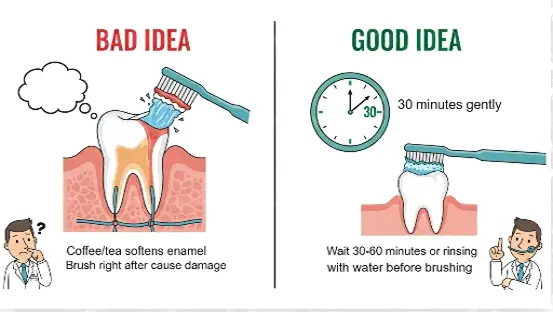
Recommend brushing after drinking staining beverages, but dentists strongly disagree. Because coffee and tea are acidic, enamel becomes softer immediately after drinking. Brushing right away can scratch softened enamel and make staining worse over time.
Dentists recommend waiting 20–30 minutes before brushing. This gives your saliva time to naturally re-harden your enamel.
- Rinsing with Water Immediately After Drinking Reduces Stains: A quick swish of water right after your last sip helps wash away lingering pigments before they settle in. This does not replace brushing, but it slows down staining significantly.
- Choosing Milk Over Black Drinks Helps Protect Enamel: Milk proteins bind to tannins before they stick to your stain teeth. This makes black tea particularly less aggressive when you add a splash of milk. The same benefit applies to coffee with cream.
- Drinking in One Sitting Is Better Than Sipping for Hours: It’s better to enjoy your drink, finish it, and move on. The less time pigment spends on enamel, the fewer stains you’ll get.
- Using an Electric Toothbrush Offers a Noticeable Difference: Electric brushes remove plaque and surface pigment more effectively plaque acts like Velcro for stains, so anything that removes it helps prevent discoloration.
- Professional Cleanings Are the Only Way to Remove Deep Stains: Whitening toothpaste polishes stains on the surface. But deep stains inside enamel pores require a dental health cleaning or whitening procedure to fully remove them.
Conclusion
Your favorite drink doesn’t have to steal your sparkle. Understanding how coffee and tea stain your teeth gives you the power to control the process rather than fear it. With small changes like rinsing with water, drinking in one sitting, adding a splash of milk, and using the right toothbrush you can enjoy your daily ritual and keep your stain teeth looking bright and healthy. As dentists often say, the problem isn’t the drink. It’s the habits around the drink. Change the habits, and the stains don’t stand a chance.